Uma Fischer · 17 September 2026
Charting Subterranean Pathways: Balancing Crawl Efficiency With Anchor Distribution in Legacy Domain Shifts
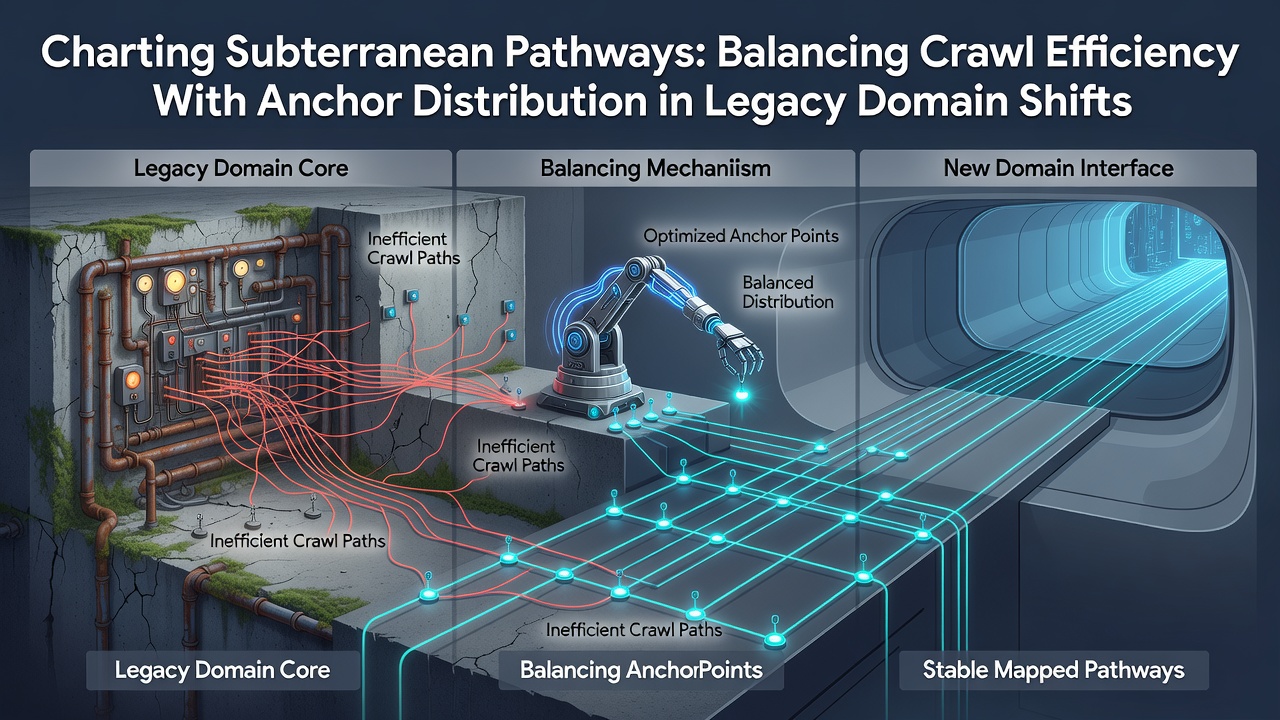
Domain migrations require careful mapping of internal link structures and redirect chains because search engine crawlers allocate finite resources across every URL they encounter during each visit cycle, and legacy domains often carry accumulated redirect layers that can fragment that allocation over time. Observers note that crawl efficiency depends on minimizing redundant paths while preserving the flow of authority signals through properly distributed anchor text, which becomes especially complex when old domains still receive inbound links from external sources that point to now-redirected addresses.
Core Mechanics of Crawl Allocation During Shifts
Search engines discover content by following links in a process that resembles charting underground routes where each junction represents a URL and each connection carries weight based on anchor context and redirect status. Data from multiple studies indicates that sites undergoing domain changes experience temporary dips in crawl frequency when redirect chains lengthen or when anchor text remains concentrated on outdated root domains instead of spreading across new canonical paths. Researchers have documented that balanced anchor distribution helps crawlers prioritize important sections without wasting requests on duplicate or low-value endpoints created during migration.
Patterns Observed in Redirect Management
Legacy domain shifts typically involve batches of 301 redirects that point old URLs to new equivalents yet these redirects consume crawl budget each time they appear in the graph. Experts tracking migration projects report that flattening unnecessary intermediate redirects and consolidating anchor text around target pages reduces the number of hops crawlers must follow, which in turn allows faster indexing of updated content. One migration analysis revealed that sites maintaining consistent anchor phrasing across both internal and external signals recovered visibility metrics more steadily than those leaving anchor profiles fragmented between old and new domains.
Anchor Distribution Techniques in Practice
Anchor text serves as a navigational signal that tells crawlers which pages deserve deeper attention within the site architecture. When legacy domains transition, maintaining a varied yet relevant mix of anchor phrases prevents over-optimization on single terms while still directing equity toward key landing pages. Studies of large-scale migrations show that distributing anchors across descriptive phrases, branded terms, and partial matches correlates with steadier crawl patterns compared with heavy repetition of exact-match anchors that once worked on the previous domain.

Implementation often begins with an audit of existing inbound links followed by internal linking adjustments that spread anchor context evenly. Those managing such projects frequently discover that updating internal navigation menus and footer links to reflect the new domain structure accelerates the rebalancing process because crawlers encounter fresh signals on every subsequent visit. As of September 2026, monitoring platforms continue to report measurable differences in crawl frequency between migrated sites that actively diversified anchors versus those that retained legacy anchor concentrations.
Integration of Efficiency and Distribution Goals
Balancing crawl efficiency with anchor distribution means treating redirects and internal links as parts of a single interconnected system rather than separate tasks. When anchor text points consistently to final destination URLs instead of intermediate redirects, crawlers spend fewer resources traversing outdated paths. Industry reports from sources such as the Internet Corporation for Assigned Names and Numbers highlight how domain history affects long-term link equity flow, underscoring the need to align anchor strategies with redirect architecture from the outset of any shift.
Technical teams achieve this integration by mapping every legacy URL to its new counterpart, then auditing anchor usage across both old and new structures before finalizing the migration timeline. Evidence from multiple case examinations suggests that sites implementing phased anchor updates alongside redirect consolidation experience fewer indexing gaps because crawlers receive clear, non-repetitive signals that guide them efficiently through the updated site map.
Monitoring and Adjustment After Transition
Post-migration observation periods allow teams to track how crawlers respond to the revised pathway structure. Log file analysis combined with server-side metrics reveals whether crawl budget is being used effectively or whether anchor concentration still creates bottlenecks. Research published through academic channels including the Stanford Web Crawl Study archives demonstrates that sites maintaining dynamic anchor distribution continue to see improved resource allocation even months after the initial domain change completes.
Adjustments often involve refining internal link placement on high-traffic pages and ensuring external link updates reach major referring domains. Those overseeing these processes note that continuous monitoring prevents anchor patterns from reverting to legacy concentrations that no longer match the current site hierarchy.
Conclusion
Effective management of subterranean pathways during legacy domain shifts rests on simultaneous attention to crawl resource allocation and anchor text distribution across both redirect chains and internal structures. Data consistently shows that coordinated updates reduce wasted crawler requests while preserving authority flow to priority pages. Organizations that treat these elements as interconnected components rather than isolated fixes tend to achieve more stable indexing outcomes following migration.